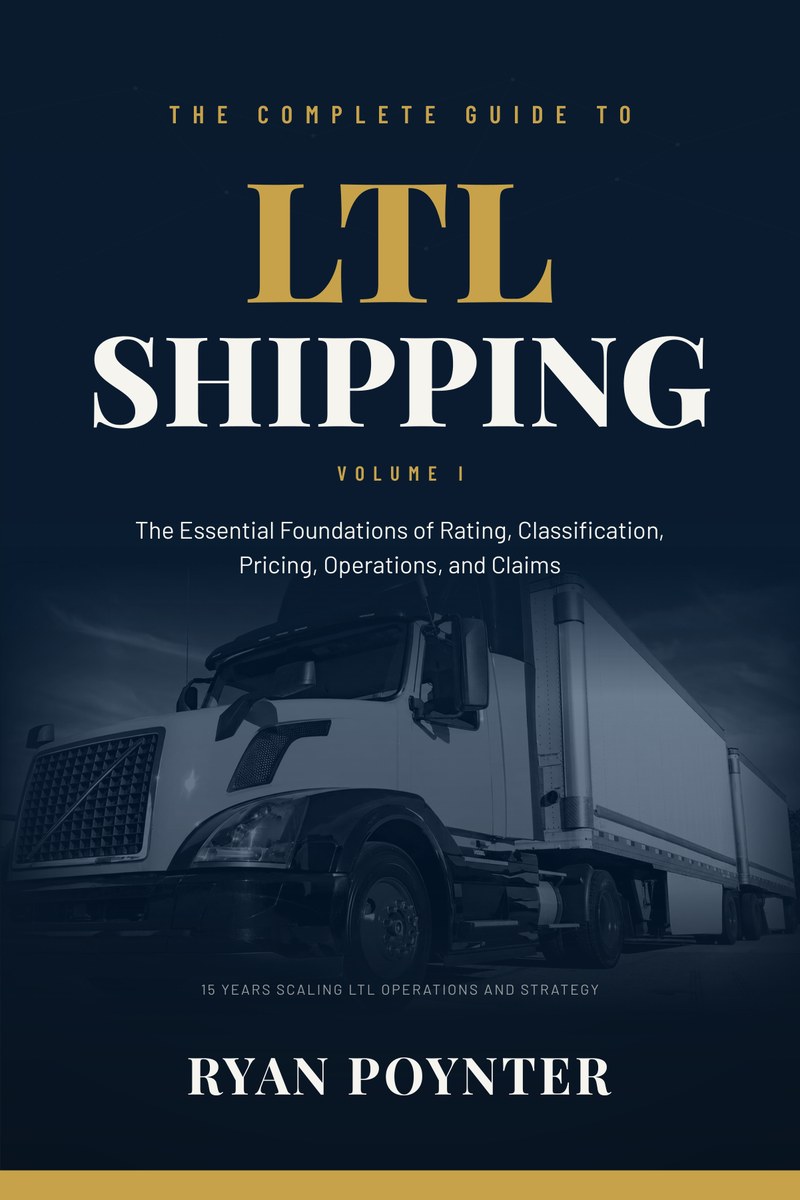
The manual LTL never had
Too many LTL shipments follow the same costly pattern: a quote that doesn't match the invoice, a vague bill of lading, or a reclass no one saw coming. Most professionals learn LTL one expensive mistake at a time. This book gives them a better way.
Drawing on 15 years as a shipper, 3PL executive, and LTL division leader, Ryan Poynter explains how freight is classified, rated, priced, audited, and managed — so readers can prevent errors, control costs, and resolve claims with confidence.
- Understand how freight classification and the NMFC system determine your rate
- Learn the rating mechanics carriers use — and where the real negotiating leverage is
- Read a rules tariff, audit an invoice, and catch billing errors before they cost you
- Navigate the claims process and resolve the disputes that matter
Current to the 2025 NMFC changes — including the standardized 13-tier density scale effective July 19, 2025.
What's inside — 28 chapters + 4 appendices
- 1. What Is LTL Shipping, and Why Is It So Complicated?
- 2. The Anatomy of a Shipment
- 3. Freight Class Fundamentals
- 4. Density Calculations
- 5. Weight Breaks and Rating Curves
- 6. ZIP Code-Based Rating and Lanes
- 7. Accessorial Charges — The Complete Reference
- 8. Base Rates, Discounts, and FAK Arrangements
- 9. Carrier Pricing Programs and Contract Structures
- 10. General Rate Increases (GRIs)
- 11. Fuel Surcharges
- 12. Minimum Charges, Rating Rules, and How Invoices Are Actually Calculated
- 13. How to Read a Carrier's Rules Tariff
- 14. Using the NMFC and ClassIT+ in Practice
- 15. Choosing, Onboarding, and Managing Carrier Relationships
- 16. Packaging and Palletization Best Practices
- 17. BOL Accuracy and the Most Common (and Costly) Paperwork Errors
- 18. Booking and Dispatch Efficiency
- 19. Technology and Systems
- 20. Common Issues
- 21. Delayed Transit and Service Failures
- 22. The Claims Process, Start to Finish
- 23. Dispute Resolution With Carriers
- 24. Freight Spend Analysis and Benchmarking
- 25. Negotiating With Carriers
- 26. Working With Brokers and 3PLs
- 27. Automation and the Future of LTL Technology
- 28. Where the Industry Is Headed
- A. Standard 13-Subprovision Density Scale Quick Reference
- B. Accessorial Glossary
- C. Sample Bill of Lading — Key Fields Checklist
- D. Claims Documentation Checklist
Turn the book into a credential
The book and the LearnLTL certification course are built to work together — read the book, then prove the knowledge with a verifiable certificate of completion.
See the certification →Written from both sides of the LTL equation

Ryan Poynter has spent 15 years in LTL — as the shipper responsible for the freight, and as the 3PL responsible for moving it. He rose from LTL pricing analyst to Senior Vice President of LTL at a top 3PL through a period of growth from $400M to $1.6B in revenue, then built Armstrong Transport Group's LTL division from scratch. He founded LearnLTL, the education platform this book anchors. More about Ryan →
The templates that go with the book
Every major document covered in the book is available as a real, downloadable template — free, no signup: bill of lading samples, a letter of authority, an annotated invoice, a carrier scorecard, and claims checklists.
Book questions
Who is this book for?
Shippers, freight brokers, 3PL employees, and logistics professionals who book, price, or manage LTL freight — from newcomers who want a systematic foundation to veterans who want the mechanics behind what they do every day.
Does the book cover the 2025 NMFC changes?
Yes. The book teaches the current standardized 13-tier density scale that took effect July 19, 2025, including a quick-reference appendix — not the outdated 18-tier table many resources still publish.
What formats is it available in?
Paperback and hardcover on Amazon. Volume I runs 28 chapters plus four practical appendices at 6×9 inches.
What's the difference between Volume I and Volume II?
Volume I covers the essential foundations: rating, classification, pricing, operations, and claims. Volume II goes deeper into procurement, negotiation, benchmarking, analytics, routing optimization, and program strategy.
Are the templates from the book available anywhere?
Yes, free. LearnLTL hosts real, downloadable versions of the documents covered in the book — bill of lading samples, a letter of authority, an annotated invoice, a carrier scorecard, and claims checklists.
Get your copy
Available now in paperback and hardcover.